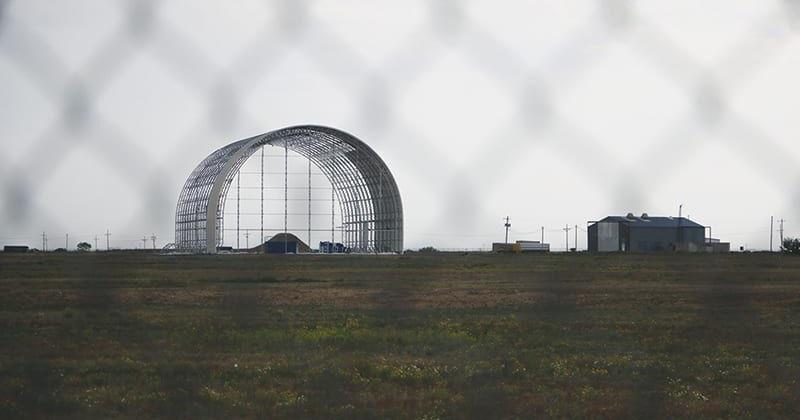
HAPS Vs Satellites: Which Is The Winner For Stratospheric Coverage?
1. The Question itself reveals A Change in the Way We View Coverage
Over the past three decades debate over reaching remote and unserviced regions from above was defined as a decision between ground infrastructure and satellites. The emergence of viable high-altitude platform stations has introduced an additional option that doesn't seem to be in a neat way It's precisely this that makes this debate interesting. HAPS don't aim to replace satellites everywhere. They're competing for specific use instances where the physical physics of operating at 20 kilometres instead of 500 or 35,000 miles produces better results. Knowing where the advantage is valid and where it's not can be a whole process.
2. This is the place where HAPS will win Cleanly
The speed of transmission is determined by distance, and distance is a factor that stratospheric platforms hold an undisputed advantage in structure over all orbital systems. Geostationary satellites sit approximately 35,786 km above the equator. This produces continuous latency of approximately 600 milliseconds. This is acceptable for calls that have a noticeable delay, problematic for real-time applications. Low Earth orbit constellations have significantly improved this operating at 550 to 1200 kilometres and with latency within the 20-40 millisecond range. A HAPS car at 20 kilometres delivers latency figures equivalent the terrestrial internet. For situations where responsiveness is crucial such as industrial control systems, emergency communications, financial transactions, direct-to-cell connectivity — this isn't a small difference.
3. Satellites Win on Global Coverage, and That Matters
No current stratospheric model could provide coverage for the entire globe. One HAPS vehicle covers a local footprint, which is massive by terrestrial standards, yet limited by. To cover the entire globe, it would be necessary to create a network of platforms distributed across the globe, each with its own set of operations power systems, energy systems, as well as station-keeping. Satellite constellations, specifically large LEO networks, are able to cover the planet's surface by overlapping covers in ways the stratospheric system can't replicate with the current vehicle counts. When it comes to applications that require truly global coverage for maritime tracking, global messaging, polar coverage, satellites are an option of the highest quality at the scale.
4. Persistence and Resolution Favour of HAPS on Earth Observation
If the job involves monitoring a specific region continuously — tracking methane emissions from an industrial corridor, observing fires develop in real-time as well as monitoring oil contamination in the aftermath of an offshore disaster The continuous near-proximity characteristic of a stratospheric platform provides data quality that satellites struggle to attain. Satellites operating in low Earth orbit can pass by every single point on the surface for a period of minutes at a time with revisit intervals measured in hours or days depending on constellation size. A HAPS vehicle which has been in a position over the same area throughout weeks allows continuous observation with sensor proximity that provides superior spatial resolution. For stratospheric earth observation purposes the persistence of this method is typically more valuable than the global reach.
5. Payload Flexibility is a HAPS Advantage Satellites Can't be easily matched
When a satellite is created, its payload has been fixed. Modifying sensors, swapping communications hardware or introducing new instruments is a matter of launching completely new spacecraft. The stratospheric platform is returned to the earth during mission launches, meaning its payload can be modified, reconfigured and completely redesigned as needs change for the mission or improved technology becomes available. Sceye's airship is specifically designed to support meaningful payload capacity, enabling combination of telecommunications antennas greenhouse gas sensors, as well as disaster detection systems within the same aircraft — a flexibility that requires multiple satellites to replicate each with a distinct costs for the launch as well as an orbital slot.
6. The Cost Structure Is Fundamentally Different
Launching satellites involves rocket costs and ground segment development, insurance and the recognition that hardware failures in orbit are a permanent write-off. Stratospheric platforms operate much like aircraft — they can be recovered, examined or repaired before being repositioned. That doesn't necessarily mean they're more expensive than satellites on basis of coverage area, but it influences the risk profile and the upgrading economics significantly. When operators are testing new services or entering new markets, being able to retrieve and modify their platform rather in accepting hardware orbitals as sunk-cost provides a significant operational advantage particularly in the initial commercial phase the HAPS market is working through.
7. HAPS is a 5G Backhaul, Where Satellites Are Not Efficiently
The telecommunications platform enabled by the high-altitude platform station that operates as a HIBS which effectively is creating a cell-tower in the sky built in order to interface with the existing technology for mobile connectivity in ways that satellite historically isn't. Beamforming from a stratospheric telecommunications antenna allows dynamic signal allocation across a broad coverage area that allows 5G backhaul ground infrastructure and direct-to device connections simultaneously. Satellite systems are gaining more capabilities in this arena, however the fact that they operate closer in proximity to ground give stratospheric networks an advantage in signal the strength of their signal, reuse of frequency and compatibility with spectrum allocations developed for terrestrial networks.
8. Risks to Operational Safety and Weather Vary Significantly Between the Two
Satellites, once they have been placed in stable orbit, have a tendency to be indifferent to the weather on Earth. A HAPS vehicle operating in the stratosphere face more challenging operational conditions such as stratospheric patterns of wind that are influenced by temperature gradients as well as an engineering problem of surviving at night while still maintaining the station. The diurnal cycle or the every day rhythm of solar energy availability and overnight power draw is a design restriction that all solar-powered HAPS have to address. Recent advances in lithium-sulfur battery power density in addition to solar cell energy efficiency have been able to close this gap, but it is the actual operational issues that satellite operators can't need to address in the same fashion.
9. The most honest answer is that They fulfill different mission.
Representing satellites against HAPS in an all-or-nothing contest misses the point of how the non-terrestrial technology is likely evolve. A more accurate picture is a multi-layered framework where satellites manage globally-reaching applications and where universal coverage is the main factor in the stratospheric platform, while stratospheric platforms support the regional persistence mission -connectivity for geographically difficult terrain, continuous environmental monitoring, disaster response, and the expansion of 5G into areas in which terrestrial rollouts are not financially viable. The positioning of Sceye's satellites reflects exactly the logic of this model: a platform designed to do things in the specific area for long periods of time, using sensors and a communications payload that satellites can't efficiently replicate at that elevation and the distance.
10. The Competition Will Ultimately Sharpen Both Technologies
There is a plausible argument that the growth of credible HAPS programmes has helped accelerate innovations in satellites, as well as reverse. LEO the constellation operators have expanded both coverage and latency ways that push the boundaries of what HAPS needs to clear in order to compete. HAPS developers have demonstrated a long-lasting regional monitoring capabilities, which will force satellite operators to look at revoking frequency and sensors resolution. They are also evaluating the Sceye and SoftBank partnership that targets Japan's nationwide HAPS network, which includes pre-commercial services scheduled for 2026, is among the most clear evidences yet that stratospheric platforms are moving from a hypothetical competitor to an active player to influence how the interplanetary connection and market for observations develops. Both technologies will be better for the pressure. Have a look at the top sceye aerospace for blog info including sceye haps airship specifications payload endurance, marawid, Direct-to-cell, softbank sceye partnership haps, 5G backhaul solutions, sceye haps project updates, softbank haps pre-commercial services japan 2026, softbank sceye partnership haps, Sceye Wireless connectivity, softbank pre-commercial haps services japan 2026 and more.
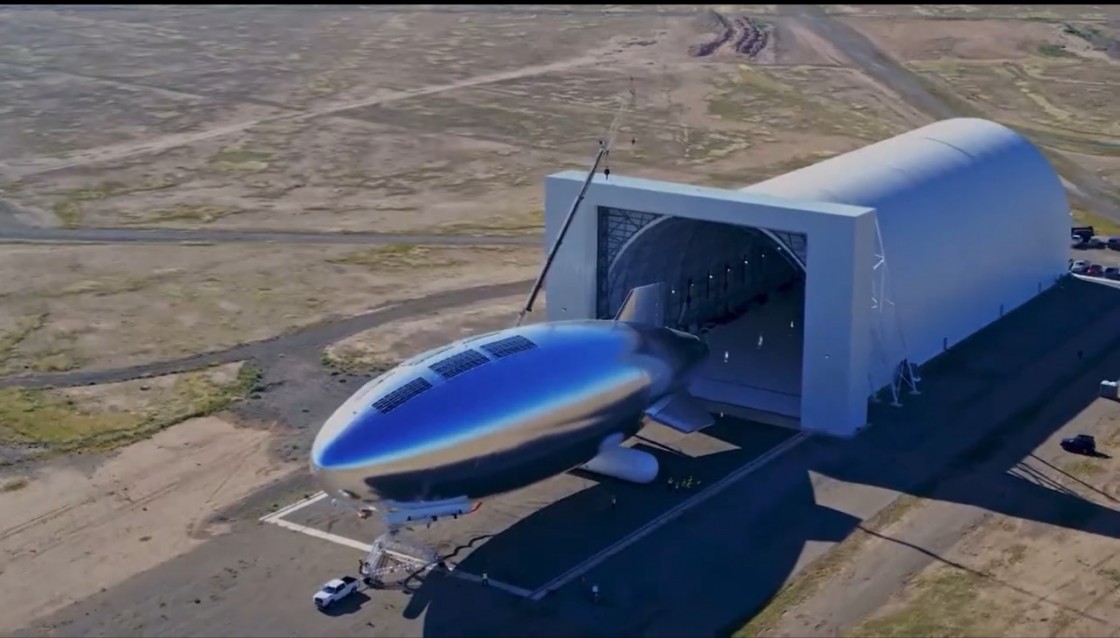
SoftBank'S Pre-Commercial Haps Services: What To Expect In 2026
1. Pre-Commercial is a specific and significant Milestone
The terminology matters here. Pre-commercial services occupy one distinct stage of the development of any brand new communications infrastructure — going beyond the experimental demonstrations, beyond proof of concept flight campaigns, and into domain where real users get real-time services in conditions that provide a rough idea of what commercially-oriented deployment would be. The platform must be functioning reliably, and it is able to meet the quality thresholds that the actual applications depend on, the ground infrastructure is interfacing with the stratospheric telecom antenna accurately, and that the necessary regulatory authorizations are in place to work over populated areas. Being pre-commercial is not a marketing milestone. This is a functional one and the fact that SoftBank has stated its intention of reaching this status with Japan in 2026 sets an objective that the engineering on both sides of the partnership needs to meet.
2. Japan is the best country for a First Time Try
Choosing Japan as a place to conduct strategic pre-commercial services isn't unintentional. The country is a mix of attributes which make it ideal as a initial environment for deployment. The terrain of the country — mountainous terrain with thousands of inhabited islands extensive and complex coastlines — present real issues with coverage that stratospheric technology is designed to solve. The regulatory environment it operates in is sophisticated enough to handle the airspace and spectrum questions that stratospheric processes raise. The existing mobile network infrastructure, operated by SoftBank offers the integration layer that the HAPS platform must connect to. And the population is equipped with an ecosystem for devices as well as digital literacy to take advantage of stratospheric broadband services without requiring an extended period of technological adoption that would hinder meaningful growth.
3. Expect Initial Coverage to Focus on under-served areas and Strategically Important Areas
Pre-commercial deployments aren't designed to cover an entire country simultaneously. The more likely pattern is specific deployments targeting regions where the gap between existing coverage and the capabilities that stratospheric connections could provide is the most obvious and also where the strategic justification for prioritizing coverage most compelling. In Japan's perspective, that means island communities currently depend on expensive and restricted internet connectivity via satellite, the mountainous rural areas where the economics of terrestrial networks have failed to provide adequate infrastructure, the coastal zone where disaster resilience is a top national concern due to the country's typhoon and seismic risk. These areas provide the clearest demonstration of stratospheric connectivity's value and the most important operational information to improve coverage, capacity, as well as the management of platforms prior to rolling out a wider rollout.
4. The HIBS Standard Is What Makes Device Compatibility Possible
One of the most common questions that anyone ought to be asking about stratospheric wireless can be if it is required special receivers or is compatible with standard devices. A framework called the HIBS framework — High-Altitude IMT Base Station -It is a standard-based solution to this question. In conforming to IMT standards which are the foundation of 5G and 4G networks around the world, the stratospheric platform that functions as a High-Altitude IMT Base Station is compatible with the device and smartphone ecosystem already present in the coverage area. For SoftBank's pre-commercial services, the subscribers who are in those areas that are covered should be able to connect to the stratospheric internet using their current devices without having to buy hardware — an essential aspect for any company that will attempt to reach the populace that are in remote regions, who most require alternative connectivity options, and are least positioned to purchase specialist equipment.
5. Beamforming can determine how Capacity is Distributed
A stratospheric network that covers a large area does not automatically provide the same useful capacity across that footprint. The manner in which the spectrum available and signal energy are allocated across the coverage zone is dependent on beamforming capabilities — the ability of the platform to direct signals towards areas regions where demand and customers are most concentrated, rather than broadcasting all over the large areas of uninhabited. As part of SoftBank's precommercial phase the proof that beamforming with an spheric telecom antenna is able to effectively provide commercially feasible capacity to specific areas within a large coverage footprint will be equally important as demonstrating the coverage area. Broad footprint with thin, ineffective capacity is not worth the effort. The targeted delivery of usable broadband in defined areas of service proves the commercial model.
6. 5G Backhaul-related applications may predate Direct-to-Device Services
For certain deployment scenarios the earliest and easiest method to prove the efficacy of stratospheric communications doesn't involve direct-to-consumer connectivity but 5G backhaul — connecting existing ground infrastructure in regions where terrestrial broadband is inadequate or non-existent. A remote community could have some network equipment that is ground-level but may not have the high-capacity connection to the greater network which makes it effective. A stratospheric device that includes that backhaul link will provide 5G coverage across communities served by existing ground systems without demanding that end users interact directly with the stratospheric network. This particular use case is more straightforward for engineers to evaluate technically, and provides an obvious and tangible value and gives operational confidence to platform performance before the advanced direct-to devices service layer is added.
7. Skeye's 2025 Platform Success Sets up the Future for 2026.
The target for pre-commercial services in 2026 will depend on what will happen when the Sceye HAPS airship achieves operationally in 2025. Validation of stations-keeping, performance of payloads under actual atmospheric conditions, Energy system behaviour over multiple diurnal cycles, and the integration testing necessary to ensure that the platform functions correctly to SoftBank's network architecture require maturity before commercial service can be offered. Updates on Sceye HAPS airship status from 2025 therefore aren't just minor announcements, but are the most reliable indicators of what the 2020 milestone will be tracking according to plan or whether it is accruing the type or technical debt that extends commercial timelines further out. The advancement in engineering for 2025 is a story about 2026 that's being written in advance.
8. Disaster Resilience is a Tested Capability, Not A Claimed One
Japan's exposure to natural disasters mean that every stratospheric, pre-commercial, service that operates throughout Japan will likely encounter situations — tsunamis, earthquakes and disruptions in infrastructure that test the strength of the platform as well as its value as emergency communications infrastructure. This isn't a limitation of the application context. It is one of its best features. An stratospheric-based platform that runs a station connectivity and monitoring capabilities during an important weather or seismic event in Japan provides a proof point that no amount of controlled testing can reproduce. The SoftBank pre-commercial stage will yield real-world proof of how the stratospheric infrastructure performs when terrestrial networks fail — precisely the evidence that other potential operators in regions that are prone to natural disasters will need observe before committing their own deployments.
9. The Wider HAPS Investment Landscape Will React to What happens in Japan
It is true that the HAPS Sector has drawn significant investments from SoftBank and other companies, however more broadly, the telecoms and investors remain in an observational mode. Large institutions, national telecoms operators from other nations and even governments who are studying stratospheric structures for their own coverage and monitoring needs are all watching what happens in Japan with keen interest. A successful deployment before commercialization — platforms on station functioning, services operating, and the performance metrics that meet thresholdscould accelerate investment decisions across the industry in ways that regular demonstration flights and announcements of partnerships will not. However, serious delays or performance problems will cause revision of timelines across the entire industry. The Japan installation is an incredibly significant issue over the entire stratospheric communications sector, and not just specifically the Sceye SoftBank partnership specifically.
10. 2026 Will Let Us Know if Stratospheric Connectivity has crossed the Line
There is a line in the development of any revolutionary infrastructure technology between a stage in which it's exciting and the period when it's real. Electricity, aviation, mobile networks as well as internet infrastructure have all crossed this limit at certain points -it was not the moment when technologies were first tested or demonstrated, but at the point when it was first functioning with enough reliability that individuals and institutions started considering its existence more than their potential. SoftBank's initial commercial HAPS offerings in Japan represent the most credible immediate scenario when the stratospheric Internet crosses that line. Whether the platforms hold station throughout Japanese winters, whether the beamforming service is sufficient for island communities, and how the service is able to withstand the type of weather conditions Japan typically experiences will determine whether 2026 is considered the year when the stratospheric internet became a real infrastructure, or when the timeline was reset. Read the top sceye softbank partnership for website recommendations including Stratosphere vs Satellite, sceye haps softbank partnership, sceye aerospace, sceye haps status 2025 2026, Diurnal flight explained, sceye haps status 2025 2026, softbank pre-commercial haps services japan 2026, sceye aerospace, what are the haps, space- high altitude balloon stratospheric balloon haps and more.