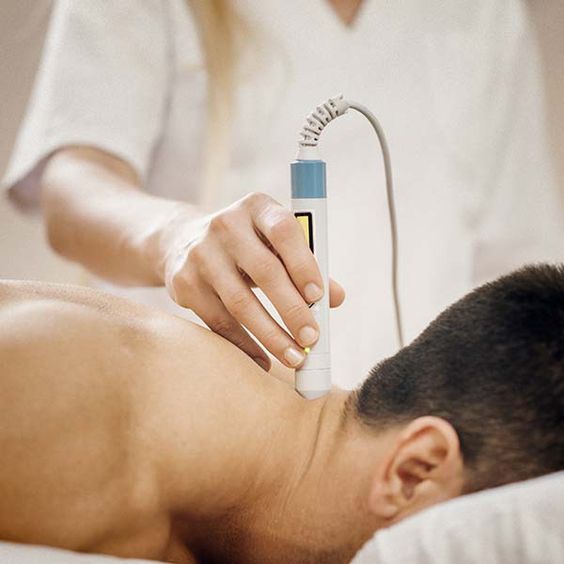
Safe Laser 1800 Vs Safe Laser 500 10 Comparisons
The Safe Laser devices, also called Photobiomodulation Therapy Systems (PBM), are Class IV therapeutic cold lasers. They are made to ease the pain, ease inflammation and promote tissue healing by emitting specific wavelengths of light that interact with the mitochondria of cells. The product line shares the same fundamental principle however there are distinct differences in terms of style as well as power and use. Safe Laser 1800, the high-power version, is the flagship. Safe Laser 500 represents a robust, more mobile device. It is important to understand the features of each to choose the best tool for your clinical needs.
1. Dosage Time and Laser Power
Safe Laser 1800: This is the most powerful unit in the Safe Laser arsenal. It has a maximum output capacity of 18 watts (18,800 mW). This is the most important feature. Its high wattage allows rapid release of massive doses of radiation. With SL 1800, procedures that could take up to several minutes using a low-powered device can be completed in just a few minutes. This is crucial for clinical efficacy, allowing the doctor to treat complex or large areas quickly.
Safe Laser 500: The Safe Laser 500, in contrast, has a maximum output power of 5,000 milliwatts (5 Watts). Although this is a lower amount of power than the 1800, the Safe Laser 500 is still classified as high-power in the market for therapeutic lasers. It has a higher dose per unit of time however, the energy that is delivered is similar to that in the 1800. It's a good treatment, but it requires more time.
2. Wavelength and Penetration Depth
Both Models: A key commonality is the use of an 810 nm wavelength. This wavelength was chosen because of its high tissue penetration. It is able to penetrate deep into joints, muscles and bones. It's beneficial for ailments ranging from superficial tendonitis, to joint arthritis that is deep. Safe Laser is a system that uses one wavelength, which is highly effective for treating deep tissue. It ensures consistency in both the 500 model as well as the 1800 model.
3. Treatment Applicators & Beam Configuration
Safe Laser 1800: This device comes with one large treatment head. The beam is divergent and spreads to the entire surface when it comes into contact. This device is perfect for treating large muscle areas or inflammation across large areas, or for a general effect over an extensive area. It reduces the need for precise, point-by-point treatment across vast areas.
The model in question is a cluster application. It features an 810nm central laser, which is identical to those used in the 1800s. But it's surrounded with a ring superluminous diodes that emit visible red light at 666nm. The wavelength of the 660-nm laser is more easily absorbed by tissue and can be utilized to treat wounds. The treatment of the 500's wavelength is more like an "combined therapy" which targets multiple layers of tissue simultaneously using the head of a cluster.
4. Calculation of Dosage and Energy Delivery
Safe Laser 1800: Due to its power, the 1800 can deliver energy in Joules of power per second very rapidly. The duration of treatment is crucial. The software on the device calculates the time needed for exposure based on desired dose. Its effectiveness is determined by the speed. A high-dose treatment can be given in a clinically reasonable time frame.
Secure Laser 500: The energy delivery is a bit slower. The devices usually have a dosimetry function built in. A contact sensor is often found in a variety of units. If it is placed on your skin, it will calculate how long the treatment will take, based on power settings and the condition being treated. This is a helpful guide for laser therapy practitioners who are just starting out.
5. Design, portability, As Well as Intended Use
Safe Laser 1800 The device is console-style. It's heavier and bigger than other lasers. It was intended to be a stationary device to be used in a clinical setting, like a physiotherapy clinic, sports medicine clinic or veterinary hospital. The design of the machine is geared towards endurance and power for regular usage.
The 500 Safe Laser is portable. The device is tiny and compact, like a big electric razor. It's lightweight and portable in a carrying case. It is ideal for those who travel to see therapists.
6. Clinical Applications and Treatment Scope
The safe Laser 1800: Because of its high power, it's the ideal choice to treat chronic and large-area problems. It is especially effective when treating patients suffering from major joint issues, such as the spine, hip, deep-knee, and extensive muscle injuries. It's the best instrument for those who need to manage the most complicated situations in an environment with a lot of.
Safe Laser 500: While effective for a wide array of conditions, its strength lies in treating localized, acute, and superficial-to-mid-depth issues. It's great for tendinitis and bursitis. It is also effective for trigger points, sprains, wound healing and strains. The red laser with 660nm wavelength is ideal for superficial soft tissues, skin ulcers and scar tissue.
7. Treatment Protocols & Variatility
Both models: They both utilize the same basic principles of photobiomodulation. They can be used to treat similar medical conditions like musculoskeletal pain, inflammation reduction and tissue repair. There is only a difference in "how quick and how deep." The 1800 uses the advantage of high-speed treatment for deep tissues. The 500 employs a combination-wavelength technique that includes guided doses that are in a accessible form.
8. Workflow Efficiency and Practice
Safe Laser 1800 Ideal for busy practices This laser is unparalleled in its effectiveness. If you are able to treat a single patient in five or ten minutes instead of 20 minutes, this will significantly improve the efficiency of your patients. This savings in time translates into higher profits for the practice and the ability to tackle more complex cases effectively during a typical appointment.
Secure Laser: Its workflow has an improved method of treatment. The treatment process is more time-consuming and may reduce the amount of patients who are treated per day. The system's portability and its automatic features make it ideal for a solo practitioner or a situation where time is not a factor.
9. Analysis of investment and cost-benefit analysis
Safe Laser 1800: As the most popular model, it is able to command a higher purchase price. Its clinical throughput, ability to handle the most challenging cases, and position as a key tool for revenue generation within a reputable clinic, justify its investment return.
Secure Laser 500: This is an easy way to get started with high-power Laser Therapy. Its cost is lower, which is attractive to newly trained practitioners, mobile services or as a complement in a facility that already offers 1800 for specific, localized procedures.
10. Summary: How to Choose between the Models
Safe Laser 1800 or 500 What comes down to a match between the tool and the task in hand and the practice.
Choose the safe Laser 1800 when: you have a clinic with a high patient volume as well as a large number of patients with spinal and joint disorders that are deep or you work with big dogs or athletes of high performance and women, and are concerned about clinical time effectiveness.
Safe Laser is the right option if you're in mobile therapy, need a device that is extremely portable, are treating more injuries, wounds, and superficial conditions or have a greater percentage of acute injuries.
Both tools are powerful and based in the same fundamentals of science However, they are developed for specific clinical situations. Follow the top BEMER terápia for site recommendations including orvosi lézer készülékek, lágylézer hatása, bemer nyíregyháza, safe laser készülék, lézer terápia, soft laser készülék, safe laser 500 részletre, laser lézer, safe laser 500, softlézer and more.
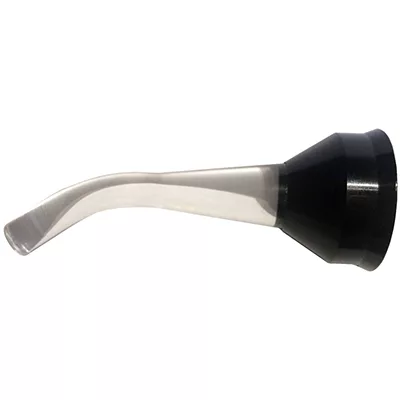
Top 10 Tips For Safe Laser Devices At Home
The utilization of high-power photobiomodulation (PBM) devices like the ones in the Safe Laser series for home therapy represents a significant change from clinical applications to patient-managed care. Experts on the subject as well as clinical and biomedical engineers and the manufacturer of the device, state that safe and effective results depend on adherence to the fundamental principles. Home therapy doesn't mean self-diagnosing chronic diseases. It means effectively managing those conditions under the supervision and supervision of a qualified professional. The following recommendations are a compilation of professional guidelines designed to ensure users of home-based Safe Laser devices can achieve the best possible therapeutic benefits while minimizing risks and maximizing the return on their investment.
1. Professional Consultation and Diagnosis Services are non-negotiable
The first and most crucial advice from experts is to not self-diagnose. Before beginning any laser treatment at home one must get a clear diagnoses from a qualified healthcare professional. The job of the experts is to confirm if the situation is suitable for laser therapy and to eliminate contraindications, such as thyroid cancers or malignancies. The specialist treating the patient must also decide the treatment protocol including the dosage, frequency and the location of treatment. This will give the patient a good foundation to begin the program of home care in a safe and efficient manner.
2. Mastering Dosage Mastering Dosage: The Cornerstone of Efficacy and Safety
Experts agree that "more does not necessarily mean better" in PBM. The relationship between effect and dose is biphasic (Arndt-Schulz Law) in that too little does not have any effect, whereas an appropriate dose has an impact that is positive, and excessive doses can cause negative or even harmful result. That means that patients at home should be careful to adhere to the dose prescribed. The dose is calculated by power and time measured in Joules. If patients don't feel immediate relief, patients must be wary of the temptation to "double" on their treatment. Over-treatment leads to tissue saturation which negates the therapeutic effects.
3. Treatment frequency is more important than intensity
In chronic conditions, consistency is more important than intensity. PBM activates biological processes, like less inflammation, increased ATP and repair of tissue. Most expert recommendations involve an initial phase of intense treatment (e.g. at least once or twice a day for two weeks) followed by maintenance (e.g. 3-4 times each week). In accordance with a physician's suggestions, implementing a regular routine will ensure that a continuous therapeutic signal is injected into tissues. This will result in more stable results and longer-lasting results, in contrast to sporadic intense use.
4. The correct application technique is determined by contact, motion and angle.
Optimal results require correct application technique. Experts offer detailed advice. Make sure that the applicator has an immediate, stable, and constant contact with your skin. Safe Lasers are not like some clinical lasers. They're specifically designed for use in contact, which reduces scattering of light while increasing the delivery of photons. Hold the device at a 90-degree angle perpendicularly to the site of treatment. The angle of the device could redirect radiation away from the tissues and decrease its effectiveness. If the area greater than the applicator head is huge it is possible to apply a slow, circular or grid-like motion to make sure that every area is evenly covered with no gaps or missing areas.
5. Coupling and preparation of the skin.
The connection between the device and your skin is crucial. It is recommended by experts that the area to be treated is clean, dry, and free of any oils, lotions or creams. These substances may create a barrier which scatters or reflect laser light, which can reduce the penetration of the laser into the tissues. It is advised to remove any areas of excessively hairy treatment area, since hair can block and scatter light energy.
6. Understanding and respecting treatment sensations
The main point to educate home users on is what to expect during the procedure. Laser therapy that is safe is nonthermal. It's not invasive. The user should not feel any burning or heat. The correct sensation will be the absence of any sensation. If you feel heat emanating from the device, it could be a sign of improperly held, slow movement, or on a part that is not recommended. The experts advise users to take a break and review their method if any sensation beyond mild pressure on the device itself is felt.
7. Recording of treatment details and tracking of the progress
The experts at the clinic advise patients to keep a meticulous record of the treatment they received. It should contain the date, time, the condition that was treated, the specific anatomical point addressed and the dose (time per point/area) and any personal notes on functional or pain levels (e.g., "shoulder pain was 6/10 prior to treatment, 4/10 2 hours later"). The log is useful because of two reasons. It aids in maintaining regularity and provides objective information to allow you to adjust your plan in the event that progress slows.
8. Follow the contraindications, precautions and rules of strictness
Safety is the most important aspect. Home users should be educated on the relative and absolute contraindications. Laser use is to be avoided when there are any specific contraindications. These include the direct application of lasers on an active cancer or malignancy thyroid gland, the abdomen in pregnancy. Lasers used on epiphyseal or growth plates for children and those suffering from epilepsy with photosensitivity are reasonable precautions. The responsible user must be aware of the following guidelines.
9. Integrating laser therapy with a holistic management plan
Experts advise against using the laser as an all-purpose instrument. PBM can be integrated into a complete plan to achieve optimal outcomes. It also includes other methods, like prescribed exercise to improve flexibility and strength. Nutrition and hydration that is properly maintained can aid in the healing process of tissue. The laser helps reduce inflammation and pain, preparing the tissue to heal. However, the other components in the plan rebuild and strengthen tissues to ensure long-term durability.
10. Finding out Realistic expectations and the "Crisis of Repair".
The last but not least, experts try to set realistic expectations. Conditions that have taken months or years to develop won't disappear in one or a few sessions. The improvement is typically gradual. Patients are informed about the possibility of a "crisis" of healing or healing crisis, a temporary exacerbation in symptoms caused by the body's powerfully active inflammatory and reparative mechanisms. Knowing that this is a normal, temporary part of the process helps prevent users from becoming frustrated. Patience, and adherence to an expert-guided protocol, are the most important factors to success. View the most popular Safe Laser bérlés for site recommendations including lagylezer terapia, safe laser használata, lágy lézer vélemények, soft laser terápia, lézerterápia vélemények, lézerterápia otthon, lágy lézer terápia, lágy lézer kezelés, safe laser 500, lágylézer készülék and more.